




Contextualising attainment without Key Stage 2 baselines
We talk you through some new measures in FFT Aspire, designed to make sense of Key Stage 4 attainment in the absence of Key Stage 2 data.

We talk you through some new measures in FFT Aspire, designed to make sense of Key Stage 4 attainment in the absence of Key Stage 2 data.
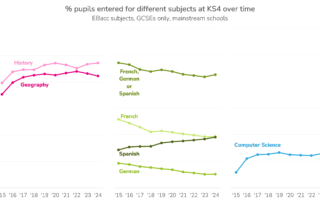
With the publication of the Curriculum and Assessment Review imminent, we look at the extent to which schools offer different subjects at Key Stage 4, and how entry patterns have been changing in the last few years
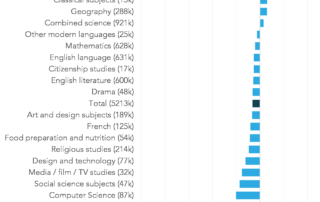
Our usual round-up of what to expect from GCSE results day
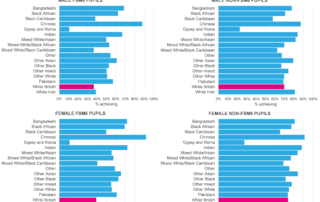
We look at how attainment at KS4, persistent absence, suspensions and permanent exclusions for disadvantaged White pupils compare to those of other groups.
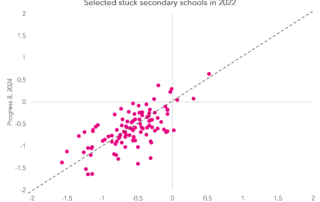
RISE teams are the government's new school improvement taskforce. We look at how their work in targeted intervention schools might be evaluated.
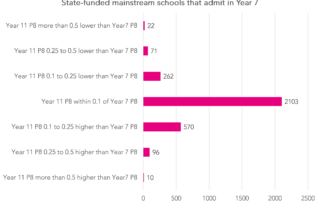
In this second part we calculate some alternative performance indicators that reflect pupil mobility
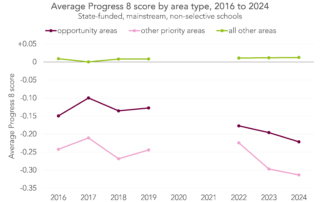
A summary of how pupil attainment and progress have changed over time in "opportunity areas" and "education investment areas" - from designation, through the pandemic, to the most recent set of results
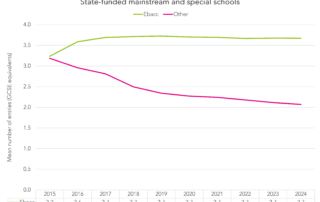
The number of non-EBacc qualifications entered by pupils at the end of Key Stage 4 has been steadily falling since 2015
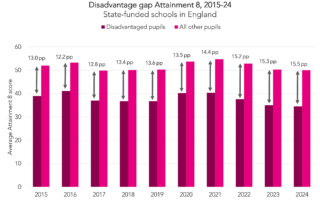
As we celebrate our tenth birthday, we look back at some of the issues we were talking about when Datalab launched, and reflect on some of the other big issues in education today.
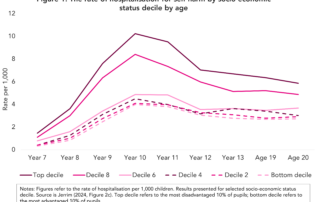
We present findings from new research into differences in hospital contacts made by young people from different socio-economic backgrounds with different levels of academic achievement.