




The links between disadvantage and the achievement grade in school inspection
Recent Ofsted analysis showed that achievement grades in inspection were related to the attainment of disadvantaged pupils. We dig into this a bit more.
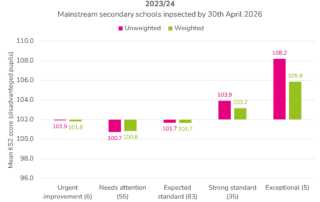
Recent Ofsted analysis showed that achievement grades in inspection were related to the attainment of disadvantaged pupils. We dig into this a bit more.
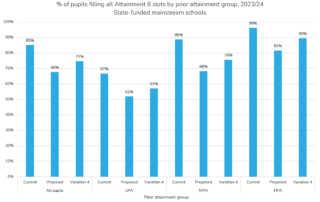
Expect an increase in entries in creative subjects and fewer entries in geography, history and triple science
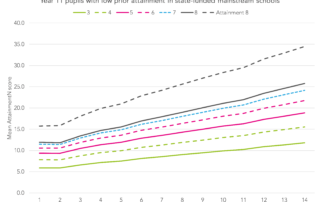
The Department for Education are consulting on a new "best-fit progress" measure for pupils with low prior attainment at the end of Key Stage 2. But does it offer any more beyond the existing Progress 8 measure?
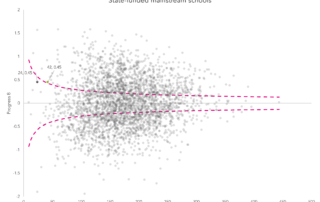
DfE are proposing a change to the way they calculate bandings that summarise schools' progress scores. We look at the pros and cons of doing so.

We talk you through some new measures in FFT Aspire, designed to make sense of Key Stage 4 attainment in the absence of Key Stage 2 data.
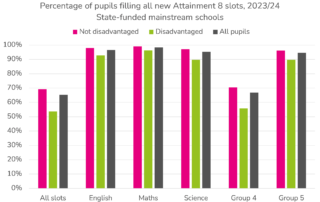
The proposed new method of calculating Attainment 8 will not affect schools' Progress 8 scores greatly but will shift the incentives to enter particular subjects
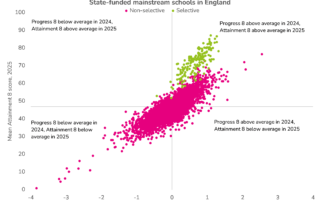
This year's published secondary school performance data shows why Progress 8 (or something like it) is needed, despite its flaws
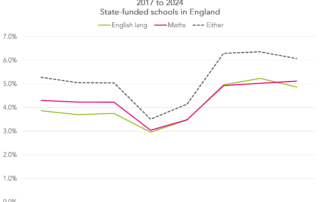
Post-COVID there has been a rise in the percentage of pupils leaving school without a pass (9-1) in GCSE English and a similar figure in maths. Most of these pupils were not entered for examinations.
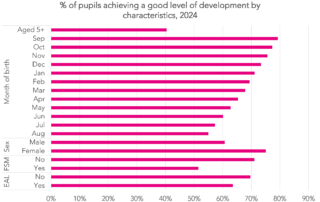
We look at some of the things DfE should consider when providing schools with comparative analysis of the percentage of pupils reaching a good level of development (GLD) at the end of the Early Years Foundation Stage.