




Languages were less harshly graded at GCSE this year, but there is still some way to go
GCSEs in modern foreign languages have historically been severely graded. We look to see if anything has changed with the introduction of new specifications.
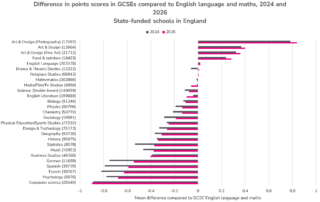
GCSEs in modern foreign languages have historically been severely graded. We look to see if anything has changed with the introduction of new specifications.
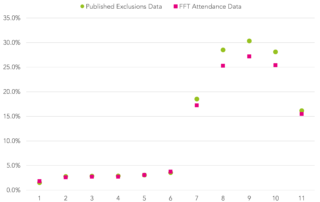
An update to our regular series using attendance data to gauge the rate of exclusion and suspension in the whole of the 2025/26 academic year.
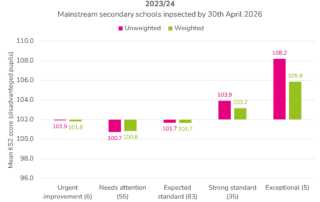
Recent Ofsted analysis showed that achievement grades in inspection were related to the attainment of disadvantaged pupils. We dig into this a bit more.
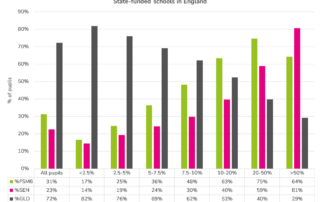
We look at the relationship between Key Stage 2 attainment and absence over (almost) the whole of primary school but also show the importance of considering context when interpreting attainment data alongside absence data.
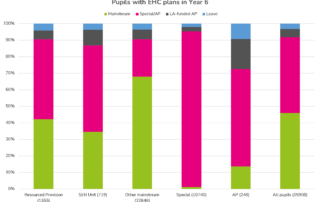
We look at how identification of SEN changes from Year 6 to Year 7, and the types of school that pupils move into.

Some thoughts about the advantages and disadvantages of using administrative data from the National Pupil Database to calculate rates of young people not in education, employment and training (NEET).
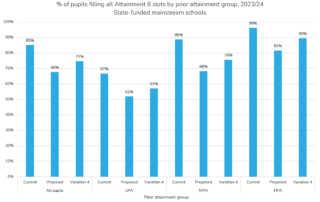
Expect an increase in entries in creative subjects and fewer entries in geography, history and triple science
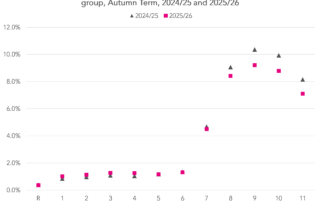
Early signs for 2025/26 suggest that suspensions are continuing to fall from their 2023/24 peak
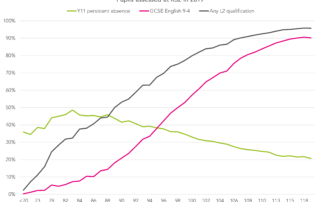
Low attainment in Key Stage 2 reading tests does not necessarily lead to poor outcomes at secondary school, but it does increase the chances of poor outcomes.