




Outcomes for pupils with low reading attainment at Key Stage 2
Low attainment in Key Stage 2 reading tests does not necessarily lead to poor outcomes at secondary school, but it does increase the chances of poor outcomes.
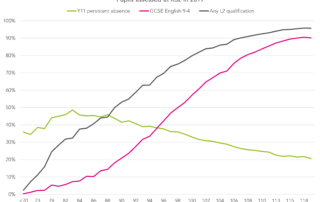
Low attainment in Key Stage 2 reading tests does not necessarily lead to poor outcomes at secondary school, but it does increase the chances of poor outcomes.
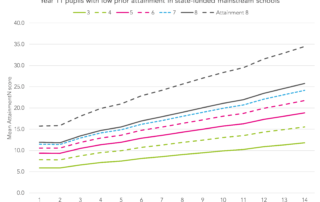
The Department for Education are consulting on a new "best-fit progress" measure for pupils with low prior attainment at the end of Key Stage 2. But does it offer any more beyond the existing Progress 8 measure?
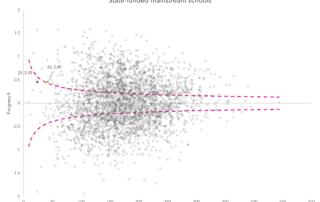
DfE are proposing a change to the way they calculate bandings that summarise schools' progress scores. We look at the pros and cons of doing so.
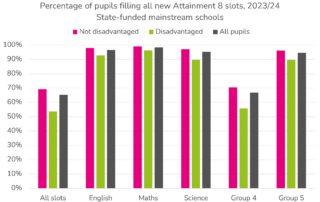
The proposed new method of calculating Attainment 8 will not affect schools' Progress 8 scores greatly but will shift the incentives to enter particular subjects
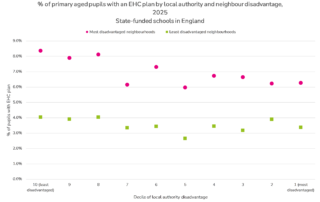
Disadvantaged pupils resident in less deprived local authorities are more likely to have an EHCP than disadvantaged pupils resident in more deprived local authorities
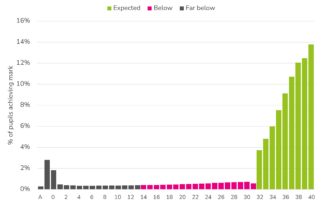
80% of pupils currently achieve the phonics standard by the end of Year 1. We look at how challenging it will be to reach 90%.
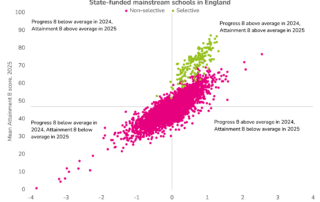
This year's published secondary school performance data shows why Progress 8 (or something like it) is needed, despite its flaws
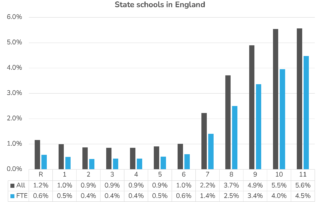
Is it right to say that there were over 170 thousand children who were severely absent in 2023/24?

Although it is a requirement that pupils who do not achieve grade 4 in English (or maths) at GCSE continue to study English (or maths) post-16 by no means all of them enter a qualification.