




The link between school belonging and GCSE outcomes
Pupils who feel they belong at school tend to get better GCSE grades, but much of that link disappears once otherwise similar pupils are compared.
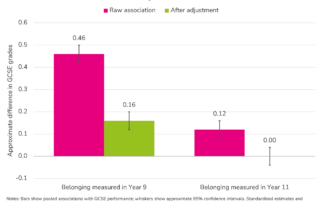
Pupils who feel they belong at school tend to get better GCSE grades, but much of that link disappears once otherwise similar pupils are compared.
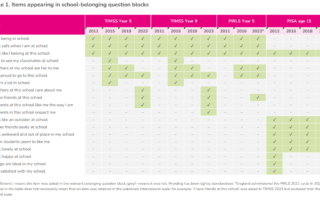
A look at how three international surveys measure school belonging, and why a single score may tell schools less than it seems.
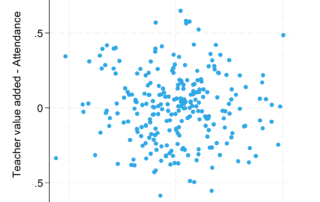
The findings from new research suggest that there are strong teacher effects on attainment in maths and reading at primary, but not necessarily on attendance.
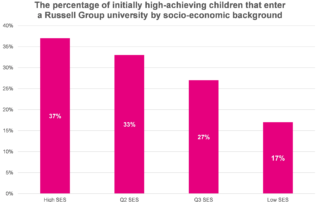
We explore how many disadvantaged children who shine in primary school go on to convert that promise into strong GCSEs, A-levels and selective university entry.

We look at how one small change in wording to just one PISA survey question has big implications for anyone using PISA to understand unexcused absences from school.
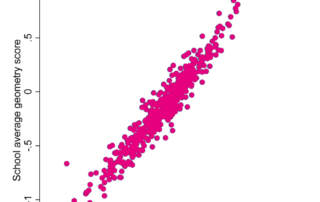
We explore the technical and design challenges of creating genuinely useful diagnostic tests.
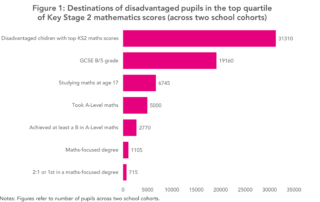
A look at the leaky pipeline for pupils who show potential in maths at age eleven but don't go on to pursue the subject.
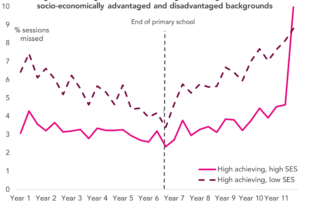
Highlights from new research into high-achieving children from disadvantaged backgrounds, focusing on school absences, exclusions and cautions/sentences from the police.
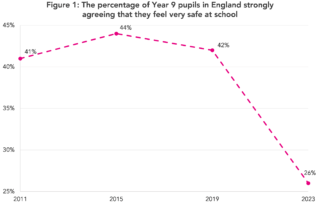
We look at data from the TIMSS study that shows a sharp rise in the proportion of young people who don’t feel safe at school.