




Best-fit progress: Is it worth it?
The Department for Education are consulting on a new "best-fit progress" measure for pupils with low prior attainment at the end of Key Stage 2. But does it offer any more beyond the existing Progress 8 measure?
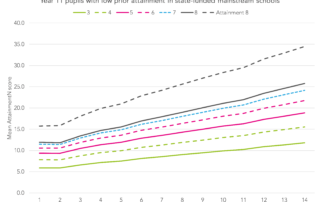
The Department for Education are consulting on a new "best-fit progress" measure for pupils with low prior attainment at the end of Key Stage 2. But does it offer any more beyond the existing Progress 8 measure?
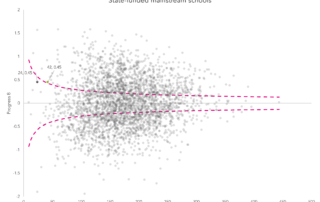
DfE are proposing a change to the way they calculate bandings that summarise schools' progress scores. We look at the pros and cons of doing so.
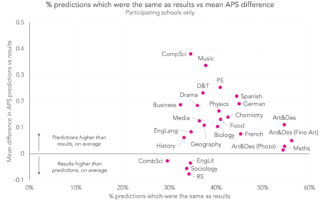
Using predicted grades and results submitted by 740 schools, we explore differences between predicted and actual grades, including variations by subject

We talk you through some new measures in FFT Aspire, designed to make sense of Key Stage 4 attainment in the absence of Key Stage 2 data.
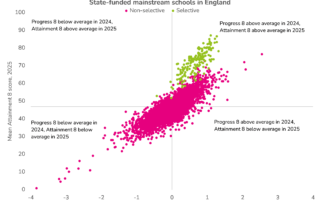
This year's published secondary school performance data shows why Progress 8 (or something like it) is needed, despite its flaws
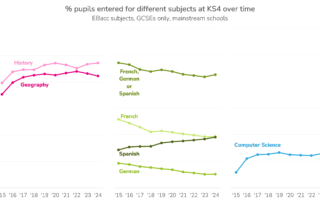
With the publication of the Curriculum and Assessment Review imminent, we look at the extent to which schools offer different subjects at Key Stage 4, and how entry patterns have been changing in the last few years
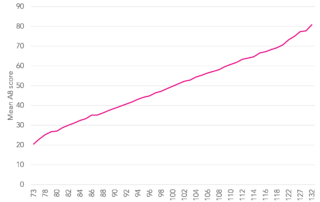
There will be no official Progress 8 measures this year due to the cancellation of Key Stage 2 tests in 2020. However, we have produced an alternative measure using CAT4 scores as a baseline.
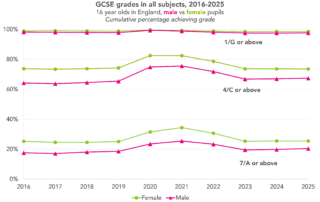
Our round-up of everything you need to know about this year's GCSE results.
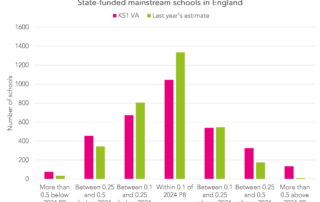
As there will be no Progress 8 measures this summer, we look at a few options for calculating proxy scores instead