




Exploring the relationship between Year 11 absence and GCSE results
We explore how much of a relationship exists between absence in Year 11 and Key Stage 4 attainment once absence in Year 10 has been accounted for.
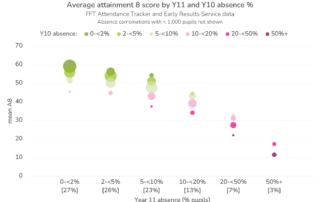
We explore how much of a relationship exists between absence in Year 11 and Key Stage 4 attainment once absence in Year 10 has been accounted for.

We look at how one small change in wording to just one PISA survey question has big implications for anyone using PISA to understand unexcused absences from school.
We talk you through some new measures in FFT Aspire, designed to make sense of Key Stage 4 attainment in the absence of Key Stage 2 data.

We look at the routes students are currently taking through post-16 education and what this can tell us about the students who might take V-Levels in the future.

We explore the technical and design challenges of creating genuinely useful diagnostic tests.
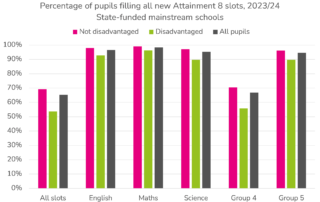
The proposed new method of calculating Attainment 8 will not affect schools' Progress 8 scores greatly but will shift the incentives to enter particular subjects
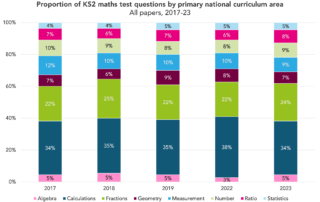
We bring you the highlights from Nuffield-funded research into Key Stage 2 mathematics sub-domain scores - and whether it is possible to produce scores that are genuinely useful to teachers and schools.
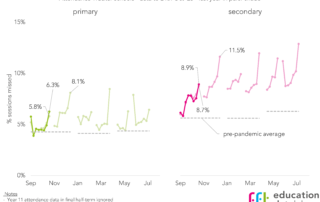
We bring you the latest insights from FFT Attendance Tracker, including overall absence and persistent absence figures for the first Autumn half-term
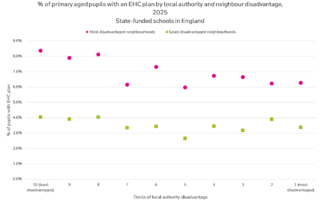
Disadvantaged pupils resident in less deprived local authorities are more likely to have an EHCP than disadvantaged pupils resident in more deprived local authorities