




Results day for Level 3 qualifications – including A-Levels and T-Levels – is later this week. As always, we’ll be posting analysis on the day.
We’re also running a results day webinar, where we’ll talk you through all of our results day analysis along with exclusive insights from FFT’s Early Results Service. It’s on 10 September and is completely free. Sign up now to book your place.
In the meantime, this post rounds up what we’ll be keeping an eye out for on the day.
1. A-Level entry numbers will increase
We’re expecting almost 25,000 more A-Level entries this year compared to last, according to Ofqual’s provisional entries data. That’s an increase of 2.9%, but probably simply explained by an increase in the population of 18-year-olds, which is up 3.8% on last year based on ONS estimates.
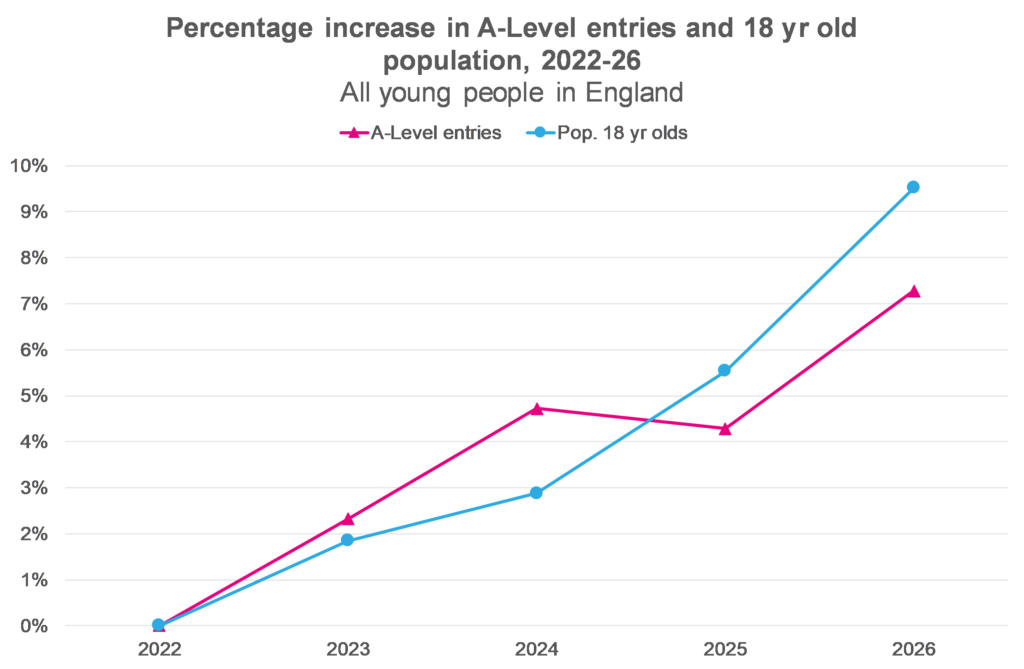
Last year, A-Level entry numbers fell despite an increase in the population of 18-year-olds. This may seem surprising but, as we wrote at the time, it was most likely just a case of entry numbers falling back to the norm after unusually high numbers in 2023 and 2024.
The high entries in 2023 and 2024 were largely a consequence of the cancellation of public exams in 2020 and 2021 during the pandemic. Under the grading systems used in those years, pupils were more likely to receive top grades at GCSE, and therefore more likely to have the grades required to progress to A-Level.
2. Entries in classical subjects, drama and English literature will fall
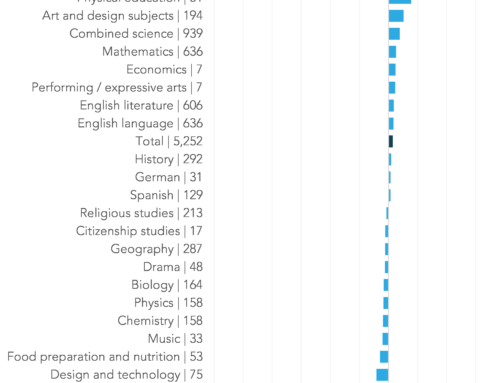
As we’ve seen, entries this year are projected to rise by 2.9%. But for quite a number of subjects, we expect entry numbers to rise by less than this, and some are expected to fall. The chart below shows how the provisional entry figures for last year compare to those for 2026 for each subject.
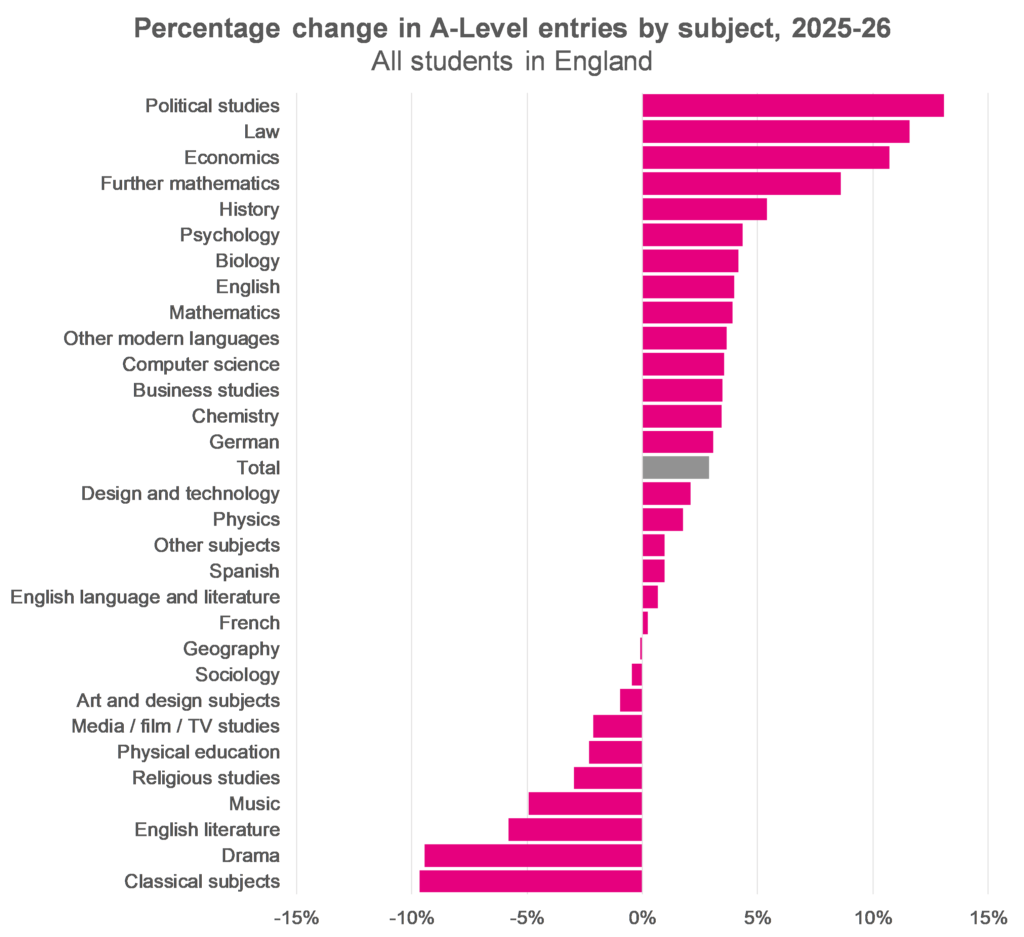
Classical subjects, drama and English literature have the biggest fall in entries in percentage terms. Classical subjects and drama have a relatively low total number of entries; the 9.7% decrease in classical subjects translates to a difference of 605 students, and the 9.4% decrease in drama to 700 students. In English literature, a fall of just 5.8% equates to a drop in entries of 2,030.
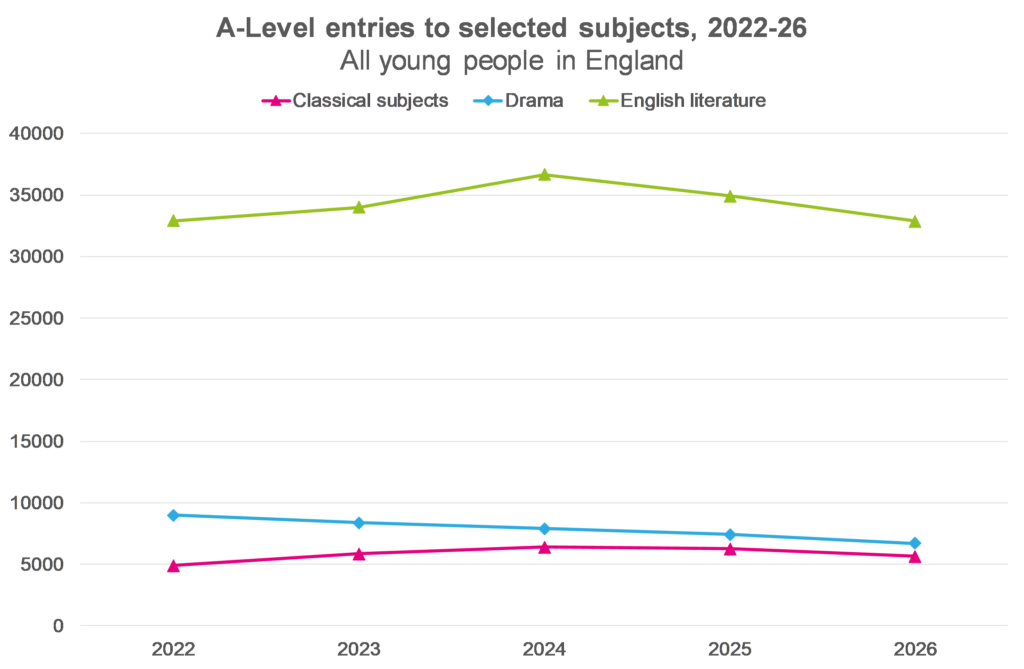
All three subjects have seen year-on-year decreases in entries over the last three years; drama has seen a fall every year since 2022.
At the other end of the scale, the subjects with the highest increase in entries in percentage terms are political studies, law and economics. Let’s see how the rankings of the ten most popular A-Level subjects are expected to change.
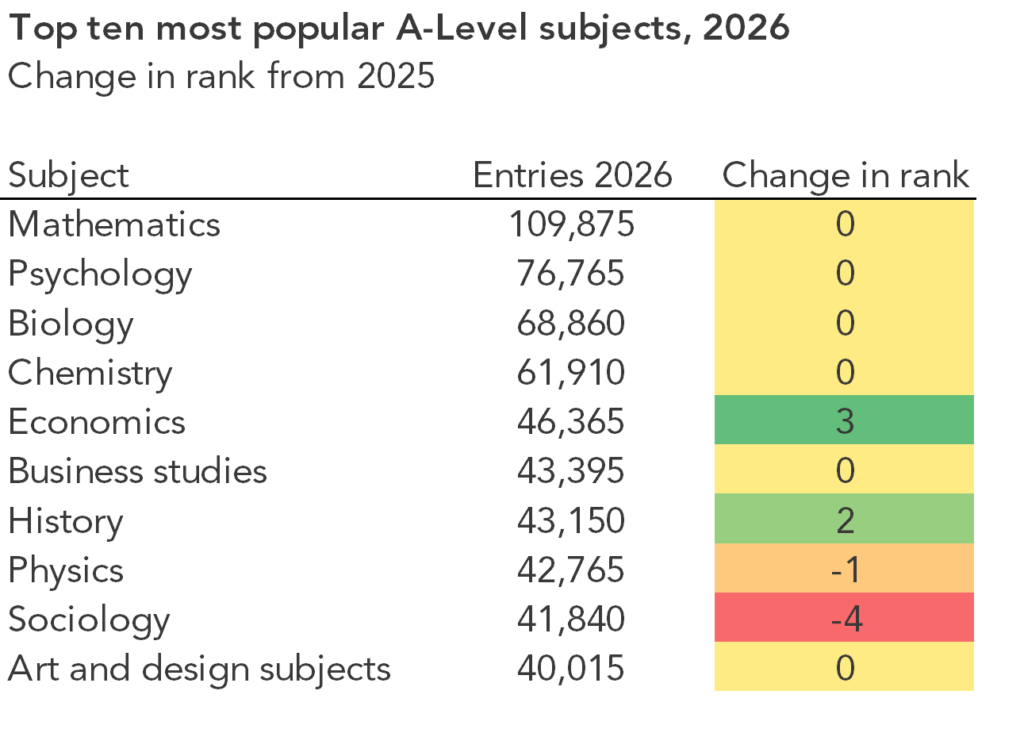
Maths, psychology and biology remain the most popular subjects. Economics and history both improve their rankings, while physics and sociology are ranked lower than last year.
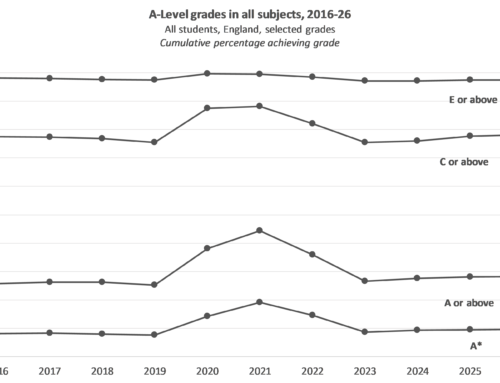
3. Headline A-level attainment will be broadly in-line with last year
Although we won’t know for sure until the day, we expect that A-level grades overall will be largely the same as last year. This follows two consecutive years of small increases.
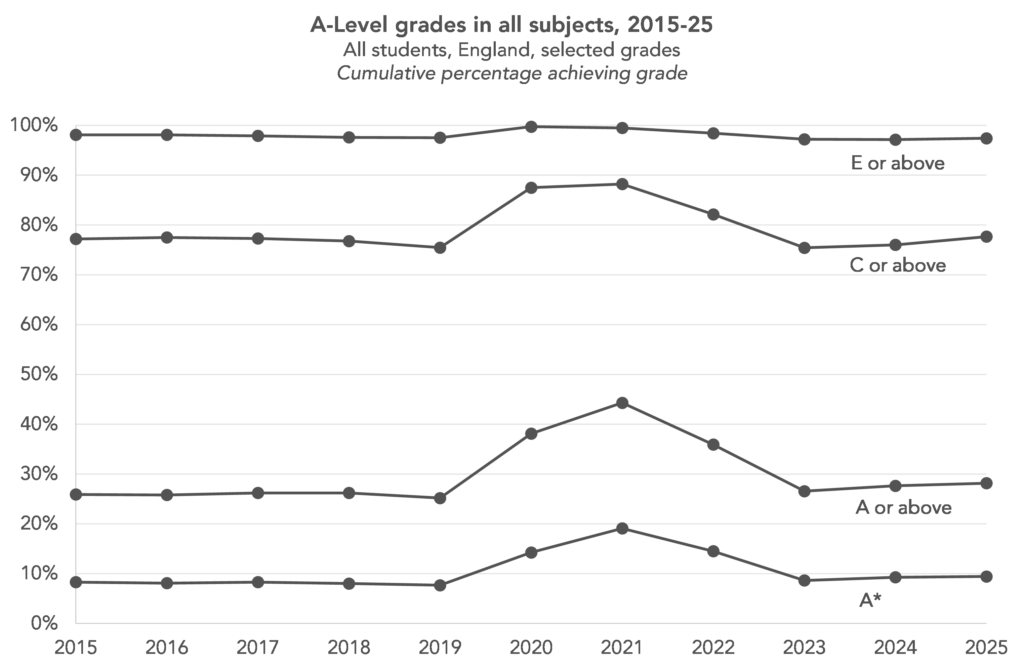
The reason for expecting even greater stability this year is that almost all students in both the 2025 and 2026 cohorts took their Key Stage 4 exams after grading returned to pre-pandemic norms, and should therefore be similar to each other in terms of prior attainment.
Two cohorts with similar prior attainment, under Ofqual’s “comparable outcomes” framework, designed to ensure that the standard required to achieve each grade remains the same each year, should receive broadly the same results.
This is in contrast to the previous years’ cohorts, whose prior attainment[1] was impacted to different degrees by pandemic-related grading mechanisms.
If we do see any changes to headline A-level attainment this year it should, in principle, be down to students producing work of a higher (or lower) standard.
4. T-Level entry numbers will increase… but remain well below original forecasts
T-Levels remain a relatively new qualification – the first cohort completed qualifications in 2022. More pathways have been introduced each year, and we’ve seen a corresponding increase in entry numbers.
While provisional data is not published for T-levels, we do expect to see an increase in the number of students completing them compared with last year, due to the addition of three new pathways. Below, we show figures for 2022-26.
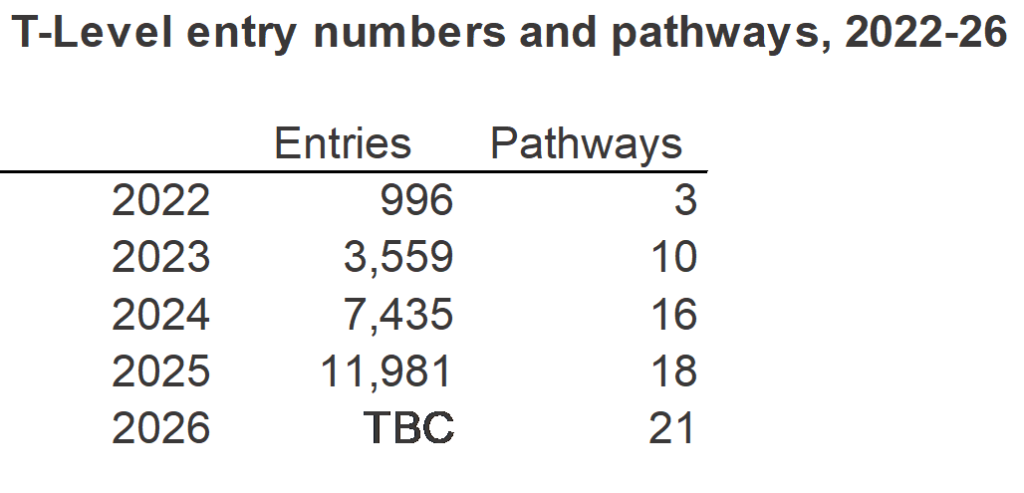
While entries have been increasing year on year, the increases are well below DfE’s original forecasting. Analysis from the National Audit Office on T-Level start numbers show that the actual figures for 2024/25 are just one fifth of the original forecast. It’s worth emphasising that we’re now talking about start numbers – the number of students who begin a qualification – as opposed to exam entry numbers.
Students completing T-Levels this year would have started their qualification in 2024/25. Here’s how the actual start numbers that year compared to various DfE estimates.
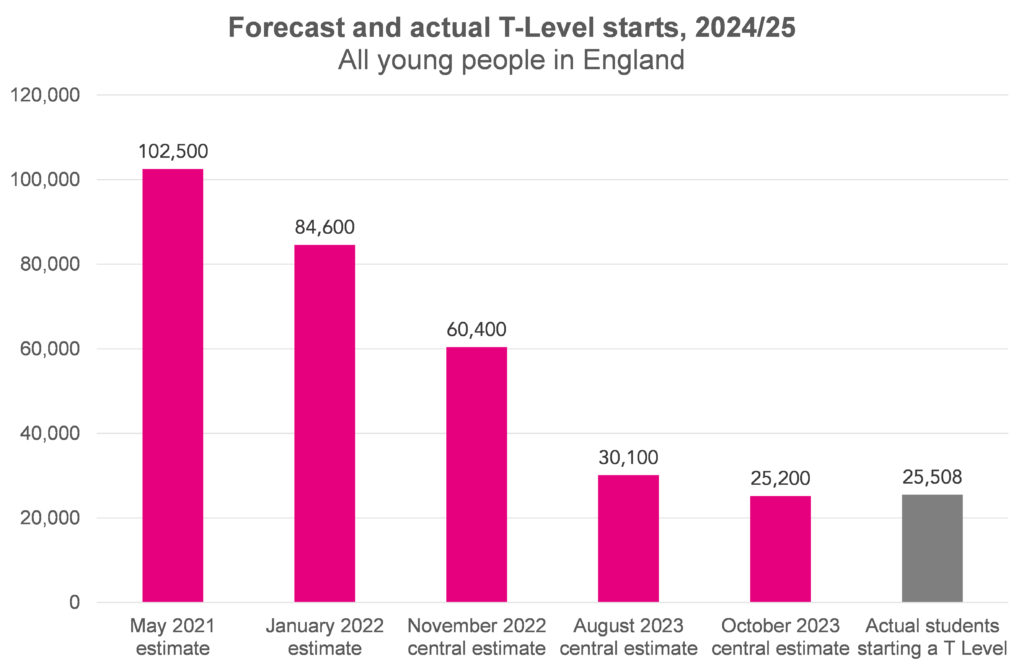
Actual start numbers were 75% below the original estimate but broadly in-line with the most recent revised target, set in October 2023.
5. Will entries to BTECs and other VTQs fall as we look forward to the introduction of V-Levels?
Our analysis on results day will mainly focus on A-Levels and T-Levels. That’s largely because that’s what most of the data published on the day relates to. But many students take different routes through post-16 education.
Only around a third of young people complete a Level 3 qualification (equivalent to 2 A-Levels) by age 19. Roughly two thirds of those take A-Levels or T-Levels, but the other third follow various routes, with some of the most popular qualifications being BTECs, VRQs and Cambridge Technicals.
The table below shows students achieving Level 3 by age 19 last year and the year before by route. Note that the majority of students included here would have completed their qualification(s) aged 18 – the year shown is the year in which they were aged 19.
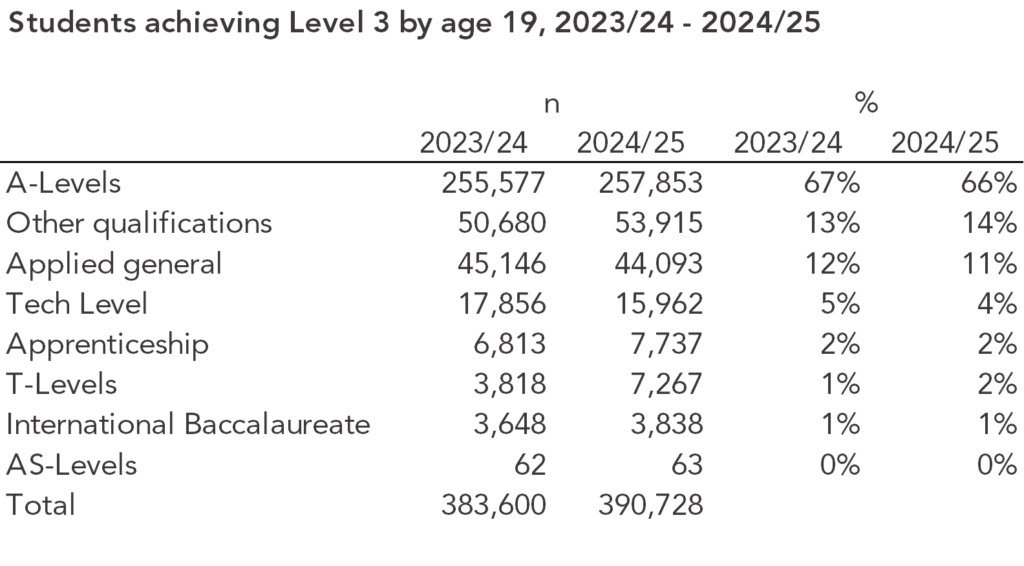
Entries to applied general and tech levels fell slightly in the most recent year for which data is available. With the timeline for the defunding of BTECs and other applied general qualifications having changed a number of times over the past few years, and the upcoming introduction of V-Levels, this is probably a trend we can expect to accelerate in the next few years.
Don’t miss our results day webinar at 4pm on 10 September. Sign up now for your free place.
Want to stay up-to-date with the latest research from FFT Education Datalab? Sign up to Datalab’s mailing list to get notifications about new blogposts, or to receive the team’s half-termly newsletter.
[1] We’re using “prior attainment” to mean prior attainment relative to other students who took Key Stage 4 exams in the same year, rather than in absolute terms, the same definition Ofqual use in implementing comparable outcomes. A-level cohorts containing lots of students who took Key Stage 4 exams between 2020 and 2022 were larger in size than previous years, and therefore lower attaining in relative terms, despite having higher grades.
Leave A Comment