




Languages were less harshly graded at GCSE this year, but there is still some way to go
GCSEs in modern foreign languages have historically been severely graded. We look to see if anything has changed with the introduction of new specifications.
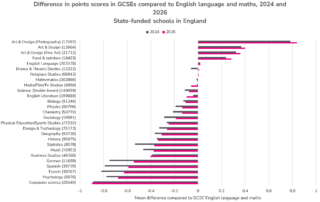
GCSEs in modern foreign languages have historically been severely graded. We look to see if anything has changed with the introduction of new specifications.
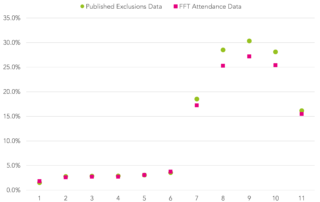
An update to our regular series using attendance data to gauge the rate of exclusion and suspension in the whole of the 2025/26 academic year.
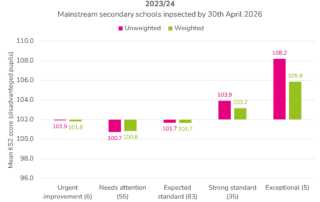
Recent Ofsted analysis showed that achievement grades in inspection were related to the attainment of disadvantaged pupils. We dig into this a bit more.
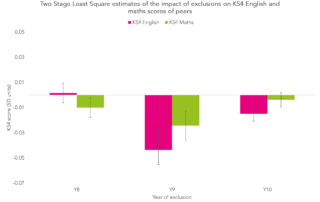
A summary of some new research examining how the timing of excluding disruptive pupils affects the outcomes of peers at the same school.
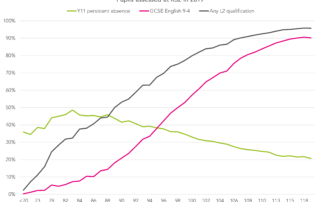
Low attainment in Key Stage 2 reading tests does not necessarily lead to poor outcomes at secondary school, but it does increase the chances of poor outcomes.
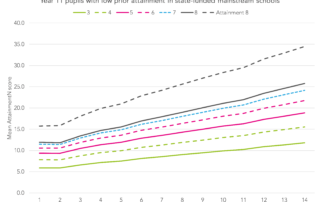
The Department for Education are consulting on a new "best-fit progress" measure for pupils with low prior attainment at the end of Key Stage 2. But does it offer any more beyond the existing Progress 8 measure?
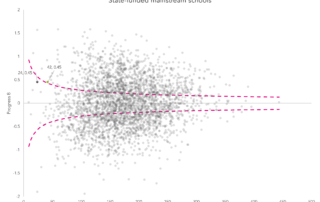
DfE are proposing a change to the way they calculate bandings that summarise schools' progress scores. We look at the pros and cons of doing so.
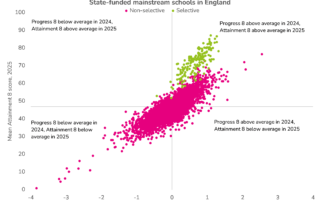
This year's published secondary school performance data shows why Progress 8 (or something like it) is needed, despite its flaws
Is it right to say that there were over 170 thousand children who were severely absent in 2023/24?