



The increase in the number of pupils taught out of year group
The number of pupils taught out of year group has been increasing in recent years, with the increase appearing to have started prior to the pandemic

The number of pupils taught out of year group has been increasing in recent years, with the increase appearing to have started prior to the pandemic
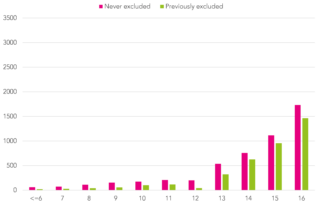
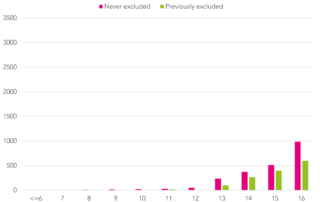
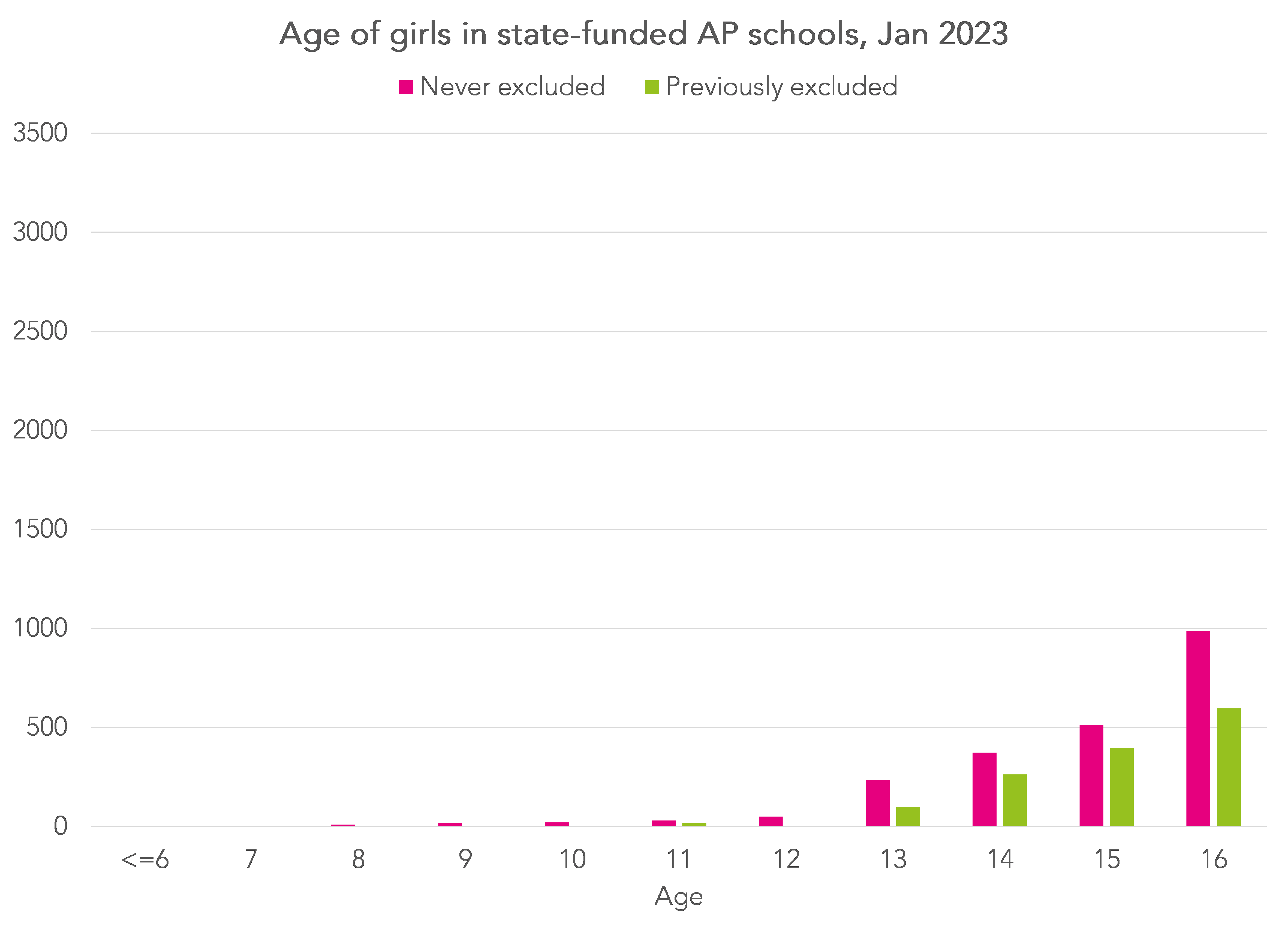
State-funded alternative provision (AP) schools are often thought of as schools for excluded pupils but fewer than half of pupils on roll have been.
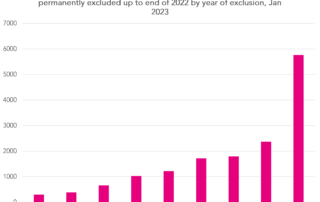
Less than half of pupils of compulsory school age in 2022/23 who had previously been permanently excluded were enrolled at state-funded mainstream or special schools.
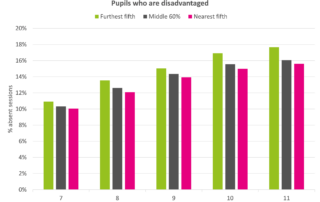
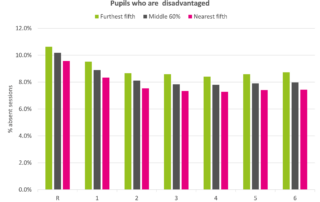
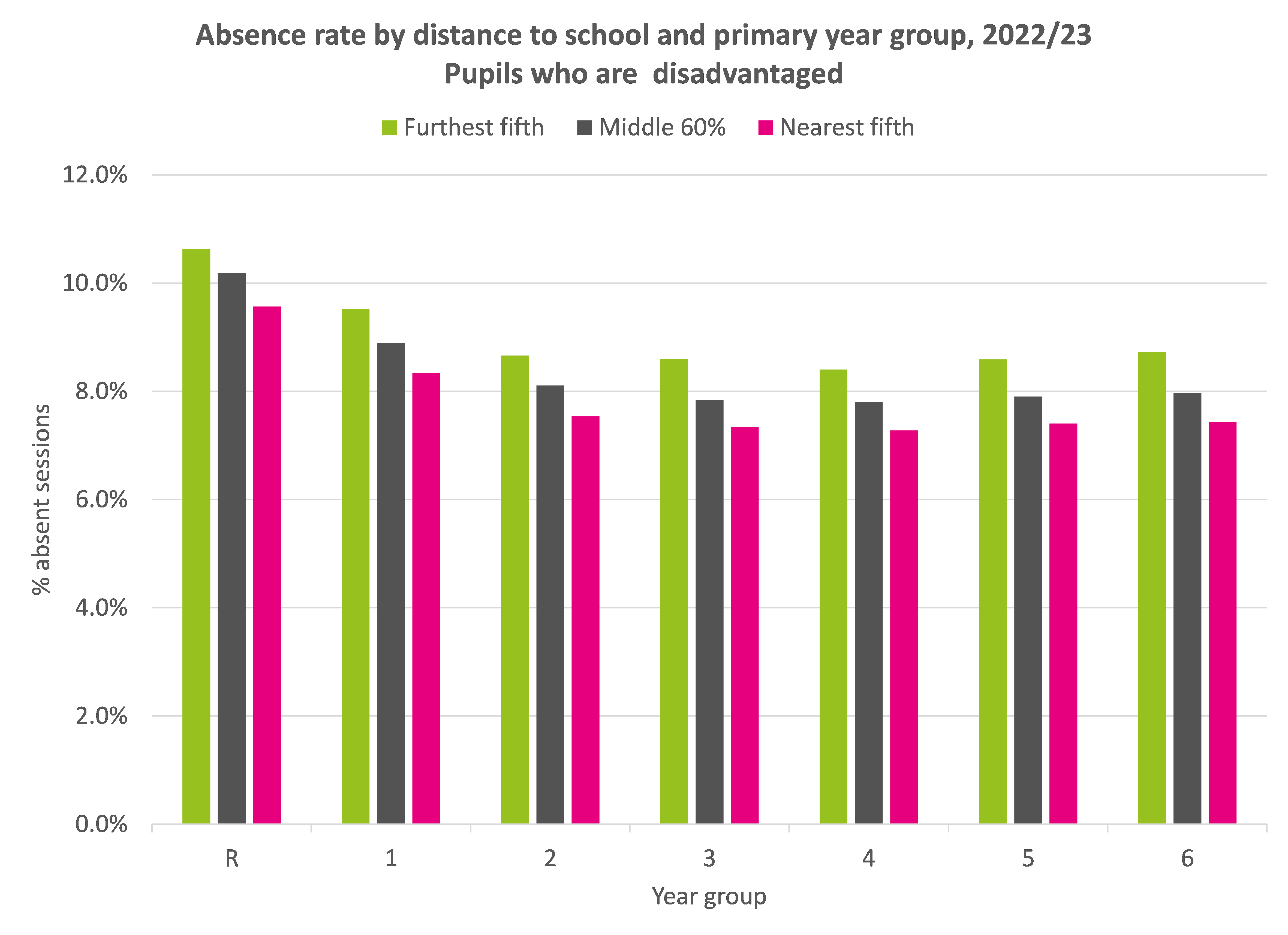
Pupils who live furthest away from their school, particularly disadvantaged pupils, tend to be absent slightly more often than other pupils
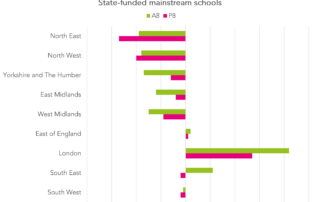
The north/south divide in school performance is mostly a distraction. Most of the variation in school performance is very local, between nearby schools.
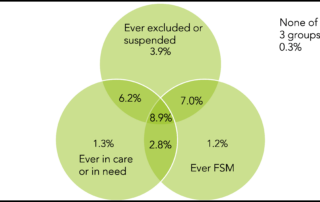
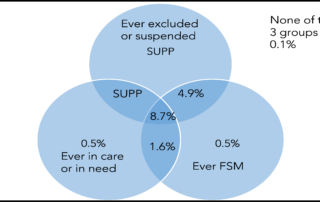
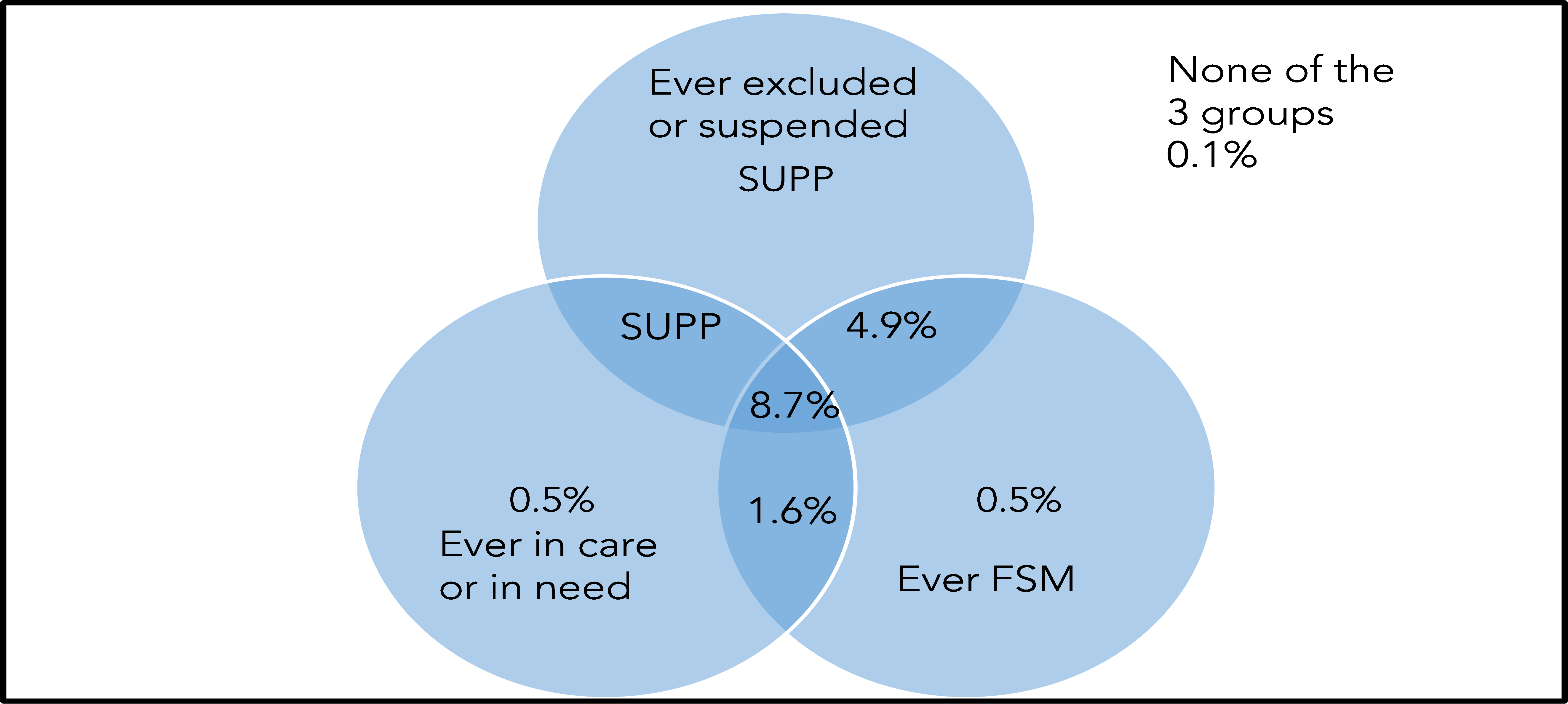
Pupils with a history of exclusion or suspension at primary school, a history of involvement with social services and a history of disadvantage are at greatest risk of exclusion during secondary school
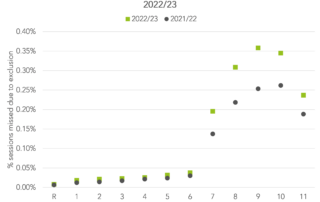
Analysis of schools' attendance registers for 2022/23 suggests there has been an increase in absence due to exclusion / suspension (code E), particularly in Years 9 and 10.
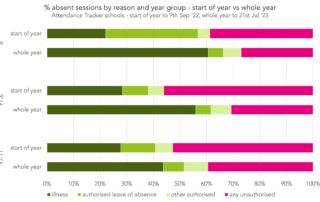
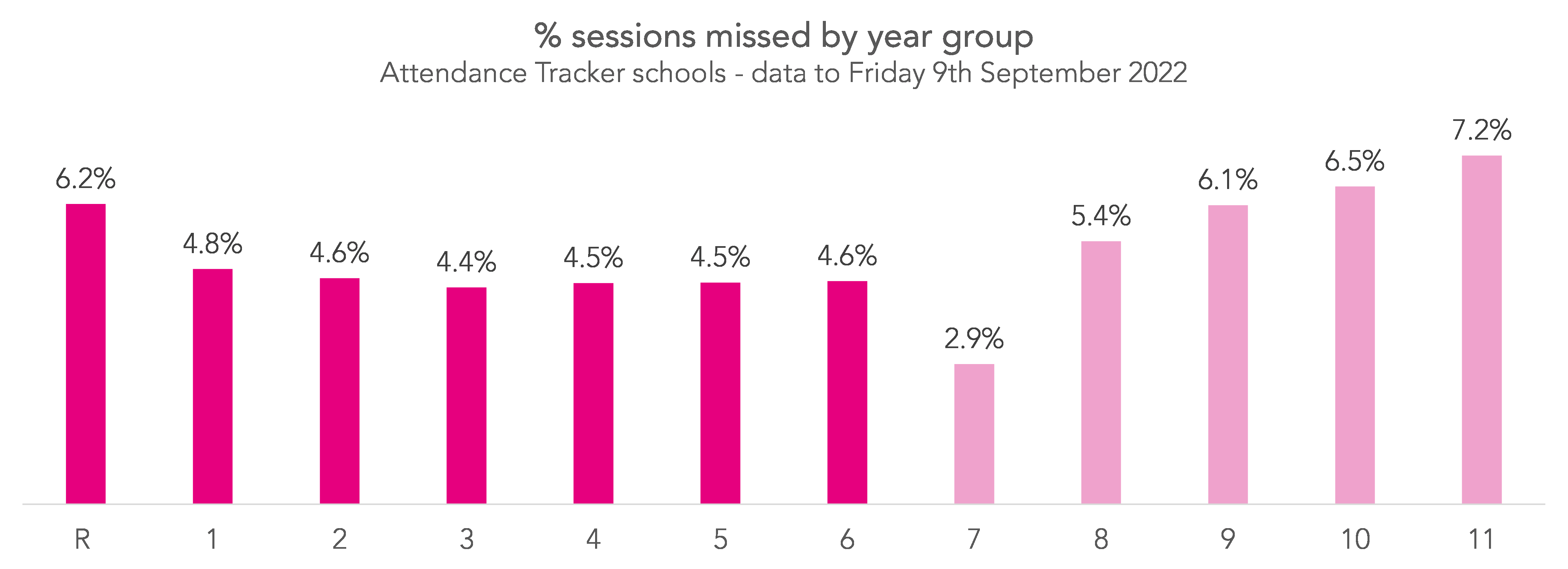
37% of Year 1-6 and 58% of Year 7-11 pupils who missed school at the start of the year went on to miss at least 10% of sessions across the whole of the 2022/23 academic year.
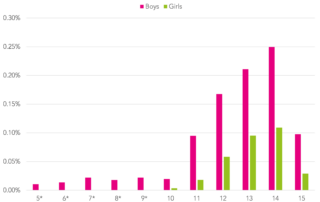
We revisit the Timpson Review to examine the risk factors of permanent exclusions in the 2020/21 academic year