


How should we define KS4 floor standards?

The question of how floor standards are defined is one that – to all heads, but particularly those who might be at risk of not meeting them – is obviously of great importance. And there are clearly numerous ways in which a floor standard could be defined. (We leave to one side the question of [...]

By |2017-10-23T12:44:21+01:004th October 2016|School accountability|

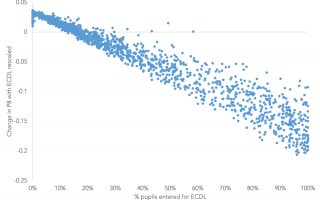
What Progress 8 tells us about how the curriculum has changed in schools

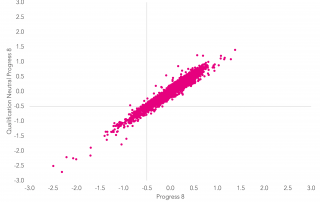
Secondary schools today received provisional Progress 8 data for 2016. This is a significant milestone given the importance attached to Progress 8 in the secondary school accountability framework. The rest of us will have to wait until provisional data is published in October. In the meantime DfE has published some very useful technical information that [...]

By |2016-12-07T12:55:08+00:0026th September 2016|Exams and assessment, School accountability|

Getting started with FFT data for KS2

School leaders are used to dealing with change, not least when it comes to assessment data, but this year is in a league of its own. With changes to all the tests, teacher assessment, scaled scores and accountability measures, headteachers would be forgiven for despairing of any attempt to make sense of it. Even when [...]

How did this year’s Key Stage 2 reading test compare to last year’s?

So now we know. The new Key Stage 2 tests in reading and maths were harder than their predecessors. And there was also substantial variation in writing teacher assessment between local authorities. In this post we examine which pupils met the expected standards in 2016, and how that compares to 2015. We also look at [...]

Progress 8 is too favourable to grammar schools and understates secondary modern achievement

Progress 8 is the new measure by which secondary schools will be judged. It works by comparing each child’s achievement in eight subjects at GCSE with the average GCSE results for other children who got the same results in exams taken at age 11. The Department for Education designed it to incentivise schools to provide a [...]

By |2017-10-23T13:18:21+01:0016th September 2016|Admissions|

Grammar schools: four key research points

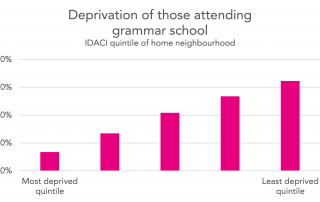
1. Academic selection creates winners and losers Children who attend grammar schools make more progress than they otherwise would, while children who attend non-selective schools in selective areas (secondary moderns) make less progress than they otherwise would. In any selective area, a majority of children will attend non-selective schools – the gains of those who [...]

By |2018-01-11T09:36:32+00:0014th September 2016|Admissions|
Go to Top