




Languages were less harshly graded at GCSE this year, but there is still some way to go
GCSEs in modern foreign languages have historically been severely graded. We look to see if anything has changed with the introduction of new specifications.
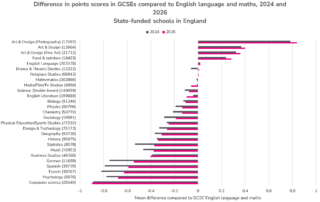
GCSEs in modern foreign languages have historically been severely graded. We look to see if anything has changed with the introduction of new specifications.
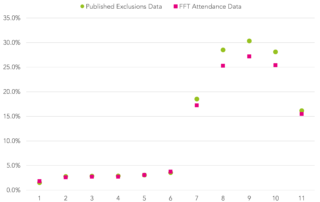
An update to our regular series using attendance data to gauge the rate of exclusion and suspension in the whole of the 2025/26 academic year.
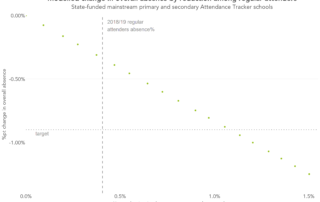
We use data from FFT Attendance Tracker to explore the level of ambition of the Government's attendance target, announced in the White Paper earlier this year
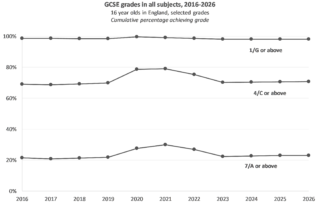
Our round up of everything you need to know about the 2026 results.
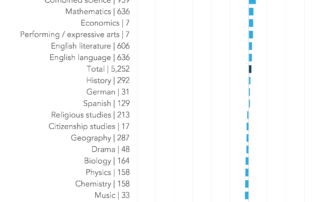
Our usual round-up of everything we'll be looking out for on GCSE results day 2026
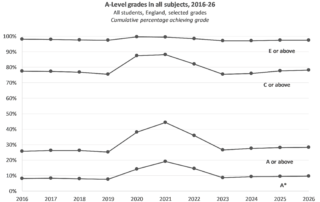
Our round up of everything you need to know about the 2026 results.
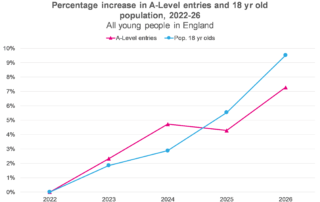
Our usual round-up of everything we'll be looking out for on results day 2026.
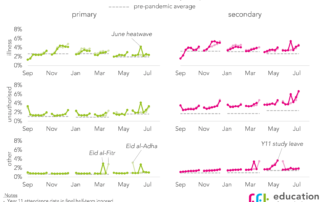
Using the latest data from FFT Attendance Tracker, we look at attendance across the 2025/26 academic year, including increased rates of absence in the lead-up to the summer holidays
A report for McKinnon, an independent not-for-profit organisation, reviewing the latest evidence on the impact of MATs on student outcomes, including thoughts on new research to improve the evidence base.