



Attendance code B: Not absent but not present at school
It is rare for pupils to be regularly educated off-site. But there are a small number of pupils who spend more time off site than at the school at which they are registered.
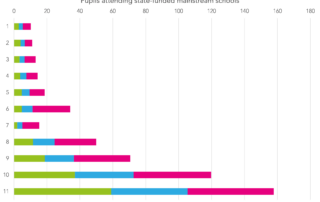
It is rare for pupils to be regularly educated off-site. But there are a small number of pupils who spend more time off site than at the school at which they are registered.

Ofsted argue that inspections support school choice. But can this be true if some schools haven't been inspected for several years?

Why looking at the number of spells of absence alongside rates of absence helps to identify those who are most likely to remain persistently absent
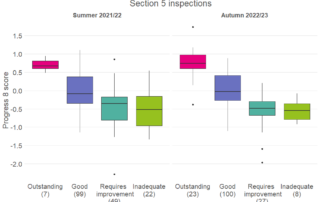
Both inspection outcomes and Progress 8 scores are imperfect proxies of school quality. We examine how strongly they are related.
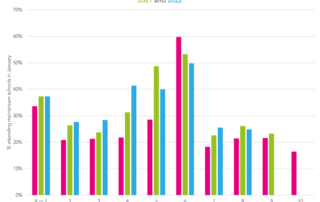
We examine the destinations of pupils who experience permanent exclusion
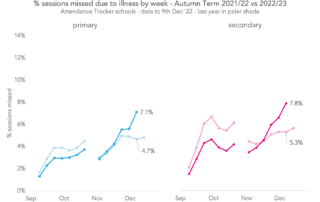
We bring you the latest insights from Attendance Tracker, and summarise the picture across (almost) the whole of Autumn Term
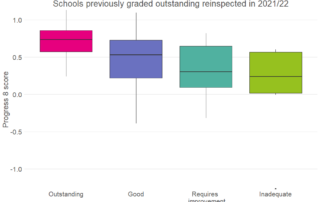
104 previously outstanding secondary schools were re-inspected last year- and just 25% kept their outstanding rating.

We discuss where secondary FFT estimates come from, and look at some of their uses and limitations
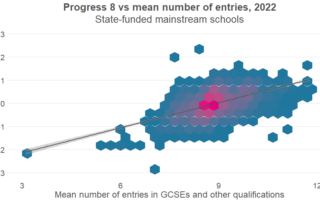
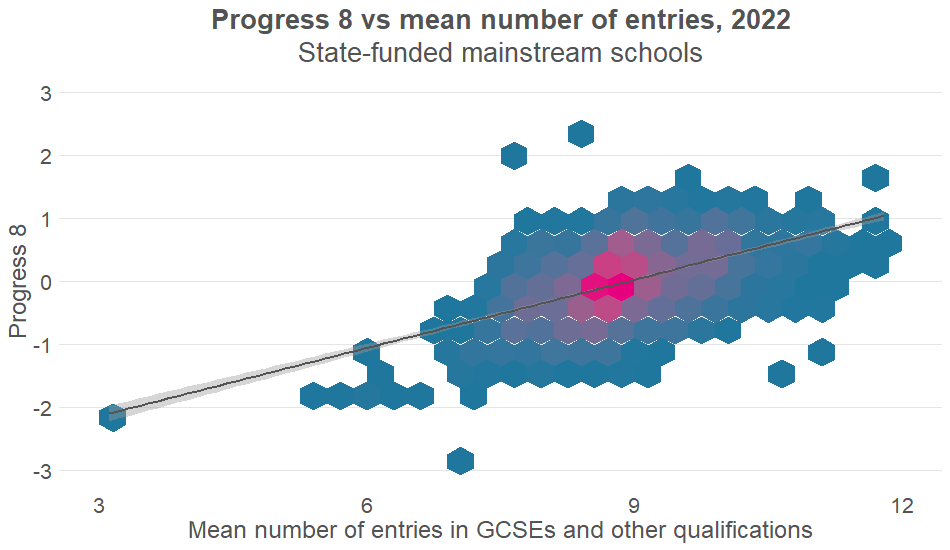
Progress 8 scores are positively correlated with the average number of entries in GCSEs and other approved qualifications. We dig into the relationship in more detail.