




Provisional GCSE and equivalent results 2018: The impact of changes to Progress 8
The effects of the removal of ECDL and the capping of extreme negative P8 scores
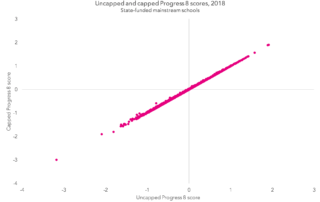
The effects of the removal of ECDL and the capping of extreme negative P8 scores
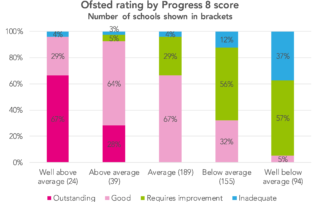
And how might this be changing?

Looking at inspections since the introduction of Progress 8.

A look at how Progress 8 scores would change if they were calculated purely based on those pupils on-roll in Year 7.
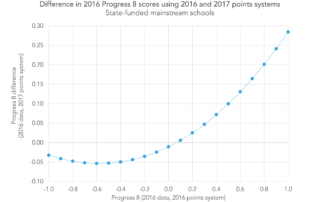
I’m not normally inclined to say “I told you so” but, in this case, it might be justified. Back in 2015, when the Department for Education announced the scores for old style GCSEs in 2017, Dave Thomson and I did some calculations to look at 'what if' the DfE 2016 and 2017 scoring systems were applied [...]
This is a joint blogpost from Education Datalab and the Association of School and College Leaders (ASCL). This post was updated on 16 October 2017. The cut-off date for inclusion in this analysis was originally stated as 30 June 2017, based on an earlier draft of this analysis, when it should have been given as 31 [...]
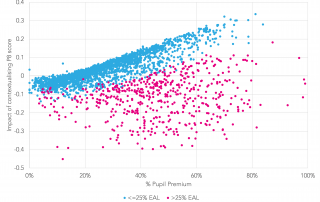
We thought we’d run out of things to say about Progress 8 but a couple of blogposts from Tom Sherrington and Jim Gordon last week made us realise that we hadn’t. Both examine, among other things, how Progress 8 scores vary by pupil and school characteristics. (Progress 8 is the headline value added measure by which [...]

This is one of several blogposts in Datalab's 'Who's left' series of posts. The full series can be found here. Progress 8 is the ‘value added’ measure by which secondary schools are now being judged – it came into play from the 2015/16 academic year. Such value added measures look at the progress which a [...]

Progress 8 is the value added measure by which secondary schools are being judged, starting from the last academic year. At Datalab we’re broadly supportive of it as a measure. But no measure of school performance is perfect, and P8 is no exception. It doesn’t account for pupil background, and so favours schools with high percentages [...]
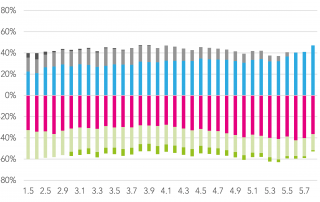
In the days of five good GCSE passes all students were equal: each child would contribute a one or a zero to the school’s pass rate, though of course it was easier for a school to get a pass for some students than for others. Under Progress 8, the half a grade positive progress made by 27 [...]