


Provisional KS4 data 2017: How are free schools faring?

The first free schools opened in September 2011, and as most secondary free schools opened with only a single year group of pupils we’re only now starting to get results for many of these schools. A total of 49 mainstream free schools have results in this morning’s release of provisional 2017 Key Stage 4 results. [...]

Provisional KS4 data 2017: Raising the floor

Schools’ provisional Progress 8 scores for 2017 were published today, having already been released to schools over a fortnight ago. This would have been a chastening experience for those falling below the floor standard of -0.5. On the surface, there are more of them this year than last. But is this fair? Changes to GCSE [...]

GCSE results day 2017: It’s all about the (lack of) money, money, money

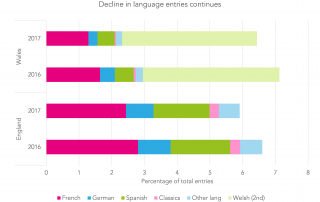
In England, the government has been trying to push schools into raising entries in the so-called EBacc subjects through its accountability metrics: the percentage entering and achieving the EBacc, and Progress 8. This is one reason why subject entries have been changing so much in recent years. However, another reason why they are changing is [...]

By |2017-12-13T19:12:12+00:0024th August 2017|Exams and assessment, School accountability|

What might EBacc average points scores look like?

Although previous governments used the machinery of performance tables and school accountability to drive improvements in the education system, the Coalition government of 2010 was the first to use it to influence the qualifications that pupils entered at age 16. But for all the rhetoric about the damaging effects on curriculum offer of the English [...]

Long-term disadvantage, part two: How do Pipworth Primary and Sheffield Park Academy do so well for their disadvantaged pupils?

This is part two in a series of blogposts exploring long-term disadvantage. Other posts in the series can be found here. The first post in this series showed how the attainment and progress of pupils varied according to how often they had been FSM-eligible – with pupils who are FSM-eligible on almost every occasion (90% [...]

By |2017-10-23T12:57:26+01:0027th July 2017|Pupil demographics|

Shadowplay

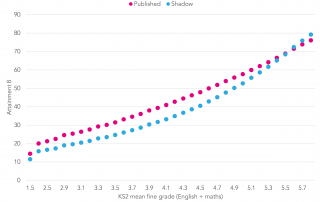
Towards the end of last month, the Department for Education published ‘shadow’ Attainment 8 data for 2015/16 [PDF]. This shows the impact of moving from the familiar scoring of A*-G grades – one point for grade G, up to eight points for grade A* – to the interim scale that will be used in 2016/17 [...]

By |2017-10-23T13:02:05+01:0027th April 2017|Exams and assessment, School accountability|

‘Ordinary working families’ are not educationally disadvantaged – those claiming benefits are

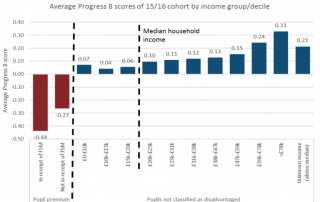
The Department for Education has published a consultation document on family incomes, pupil attainment and school attended that will either fascinate (if you are a data cruncher) or terrify you (if you are a privacy campaigner). For the first time, the records of pupils sitting in the National Pupil Database have been matched to parental [...]

By |2017-12-20T13:23:32+00:0012th April 2017|Admissions, Exams and assessment, Pupil demographics|

Getting older quicker

At Datalab we write about half a dozen blogposts in a typical month. Some we slave over and others we knock out in a matter of minutes, usually with one eye on the football or Paw Patrol. Being unashamed data wonks, we then pore over Google Analytics to see which of our posts have left [...]

By |2025-04-01T16:39:27+01:003rd March 2017|Pupil demographics, School accountability|
Go to Top